
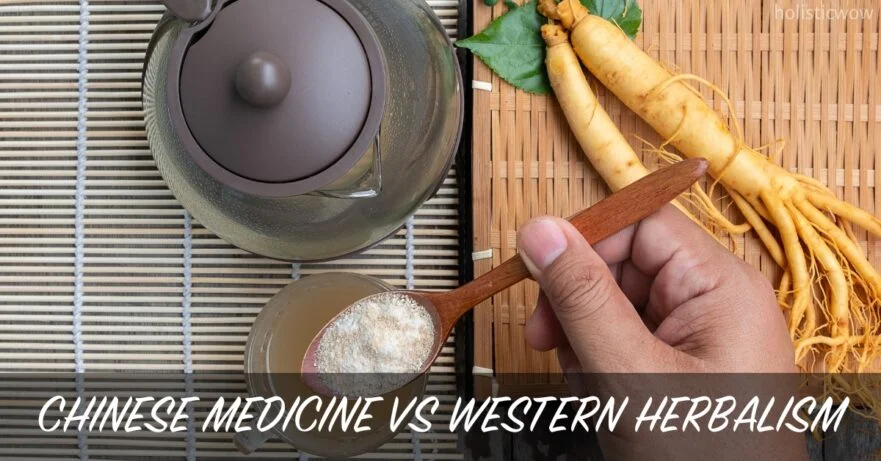
Traditional Chinese Medicine and Western herbalism each offer unique perspectives on ginseng, reflecting deep differences in philosophy, diagnosis, and use of this ancient herb. Exploring these distinct traditions reveals how ginseng’s benefits are shaped by holistic Eastern approaches versus analytical Western methods—highlighting how cultural context influences herbal medicine.
Key Takeaways
- 🔬 Differences in Herbal Traditions: Traditional Chinese Medicine (TCM) uses a holistic, personalized approach focusing on balance and harmony, while Western herbalism often targets specific symptoms using individual herbs guided by scientific research.
- 🌱 Ginseng’s Special Role: Ginseng is a time-honored herb praised for boosting energy, supporting immune health, and enhancing resilience, thanks largely to its active compounds called ginsenosides.
- 💪 Adaptogen for Stress and Vitality: Ginseng acts as an adaptogen—helping your body cope with stress, fight fatigue, and improve stamina, making it ideal for both daily stress and recovery from illness.
- ⚠️ Safety First: Ginseng can interact with common medications and certain health conditions, so always check with your doctor before starting to make sure it’s safe for you and your family.
What Are the Differences Between Traditional Chinese Medicine and Western Herbalism?
Traditional Chinese Medicine (TCM) and Western herbalism differ significantly in philosophy, diagnosis, and treatment approaches.
TCM adopts a holistic approach, focusing on restoring balance in the body by regulating Qi (vital energy) and harmonizing Yin-Yang balance.
Treatments often include customized herbal formulas, acupuncture, and dietary therapy tailored to the individual’s overall health pattern, which may help promote long-term wellness and prevent illness.
Western herbalism, on the other hand, is grounded in the study of the chemical properties of individual herbs and their specific effects on the body.
It typically targets particular symptoms or conditions using standardized herbal extracts, often based on modern scientific research and pharmacology to deliver predictable outcomes.
While both systems use plant-based remedies, TCM emphasizes the synergy of multiple herbs in a formula to support overall balance and enhance therapeutic effects, whereas Western herbalism tends to focus on the isolated action of single herbs to address particular health complaints.
Each approach offers unique insights and may complement one another when used thoughtfully, providing individuals with broader options for personalized care.
What Are the Historical Perspectives on Ginseng?
Ginseng is recognized for its long-standing role in herbal medicine, with a historical significance spanning over 2,000 years.
It was first documented in ancient texts such as the Shennong Bencao Jing, where Ren Shen (ginseng) was described as a prized remedy for promoting vitality and overall well-being and for combatting fatigue.
Over time, ginseng’s use has evolved, and it remains a key part of traditional herbal medicine practices.
Modern research has investigated the effects of ginseng on energy levels, immune function, and cognitive health, with some studies suggesting benefits, though results are mixed and further research is needed.
By bridging ancient wisdom with current scientific understanding, ginseng continues to be valued both for its cultural heritage and its potential role in supporting stress adaptation and metabolic balance, making it a unique plant in both traditional and contemporary health practices.
What Are the Key Components of Ginseng?
Ginsenosides are the main active constituents in ginseng and are primarily responsible for its adaptogenic properties, which may help the body manage stress and support overall balance.
These compounds are also known for their antioxidant effects, helping to protect cells from oxidative stress and promote cellular health.
Polysaccharides also play an important role by supporting immune function and may help boost energy levels naturally, contributing to ginseng’s reputation for enhancing vitality.
In addition to ginsenosides and polysaccharides, ginseng contains other beneficial components such as peptides, vitamins, and minerals.
These work together to enhance ginseng’s overall health benefits, improve nutrient supply to tissues, and contribute to its reputation as a natural adaptogen that supports both immune resilience and energy metabolism.
What Are the Different Types of Ginseng?
The most well-known types of ginseng belong to the Panax genus, which includes Panax ginseng (Korean ginseng), Panax quinquefolius (American ginseng), and Panax notoginseng (Chinese ginseng).
Each type demonstrates unique therapeutic potentials thanks to their distinctive phytochemical profiles.
Panax ginseng, often called Korean ginseng, is valued for its stimulating effects and ability to support overall physical and mental performance, often used to enhance stamina and combat tiredness.
American ginseng is considered more cooling in nature and is often used to help support immune function, stress management, and may have calming properties that promote emotional balance and relaxation.
Chinese ginseng, or Panax notoginseng, is traditionally used to support cardiovascular health and may help with circulation and reducing inflammation, properties that make it valuable for supporting heart and vascular wellness.
Each type offers distinctive active constituents and has different therapeutic properties and traditional uses, enabling practitioners to select the most appropriate form for each individual’s specific health goals and constitution.
How Is Ginseng Processed and Prepared?
Ginseng processing begins by selecting the root, which can be used in fresh, white, or red forms depending on how it is treated after harvest.
Fresh ginseng is typically used within a few days, while white ginseng is air-dried, and red ginseng is steamed before drying to enhance its shelf life and potential effects.
These processing types can influence the ginsenosides content and the root’s adaptogenic qualities.
Common processing types include using the dried root, grinding it into a powdered form, or creating standardized extracts that contain consistent levels of active compounds.
These forms are often used in supplements and herbal products for their convenience and consistent potency.
Decoction is the most common traditional preparation, where root slices are simmered in water to create a medicinal tea.
This method may help release beneficial compounds, enhance bioavailability, and is still widely used in herbal medicine today to maximize the absorption of ginsenosides and other key constituents.
How Is Ginseng Used in Traditional Chinese Medicine?
In Traditional Chinese Medicine (TCM), ginseng is valued as a primary tonic herb for its ability to strengthen Qi, the body’s vital energy.
It is often used to address Qi deficiency—a state traditionally described as fatigue, weakness, or low stamina, helping to boost resilience and promote recovery from exhaustion.
Ginseng’s role in TCM centers on enhancing vitality, increasing resilience to stress, and supporting recovery from illness, helping the body adapt more effectively to physical and emotional challenges.
Its tonic properties are believed to help restore balance and promote overall well-being by fortifying both the spleen and lungs.
Ginseng is commonly included in herbal formulas where it is combined with other herbs to support the body’s natural healing processes and promote longevity.
These formulas may be used to improve energy, support immune function, and promote longevity in the context of traditional concepts, providing a foundation for holistic wellness.
While more research is needed, modern studies suggest that ginseng may help reduce fatigue and support physical and mental performance, aligning with its traditional use in TCM, and may offer additional support for cognitive function and metabolic balance.
How Does Ginseng Function as an Adaptogen?
Ginseng functions as an adaptogen by helping the body adapt to physical, emotional, and environmental stress, supporting natural homeostasis.
It may support the body’s natural stress response by modulating the hypothalamic-pituitary-adrenal (HPA) axis and influencing various signaling pathways involved in stress adaptation.
Ginseng’s adaptogenic effects are linked to its main active constituents, ginsenosides, which may promote balanced neurotransmitter levels and foster a healthy stress response.
These compounds are thought to promote resilience by supporting immune health and helping the body maintain equilibrium during times of stress, although the exact mechanisms continue to be studied.
By modulating the stress response and supporting immune function, ginseng could potentially enhance the body’s ability to cope with various stressors, maintain stable mood, and promote overall well-being.
What Are the Tonic Properties of Ginseng?
Ginseng is recognized for its tonic properties in both Traditional Chinese Medicine and herbal medicine.
These properties refer to its ability to help invigorate the body, support overall vitality, and promote balance of both physical and mental energy.
Ginseng’s tonic effects are believed to help restore energy levels, reduce fatigue, and support both physical performance and mental clarity, making it an ideal supplement for those experiencing chronic tiredness or recovering from illness.
Research suggests that ginseng could potentially enhance the body’s natural ability to cope with stress and improve endurance for daily activities.
By supporting energy metabolism and helping the body adapt to physical and mental demands, ginseng continues to be valued as a natural way to promote well-being and resilience, especially in periods of increased stress or convalescence.
How Does Ginseng Influence Qi and Yin-Yang Balance?
Ginseng may help enhance Qi, which in Traditional Chinese Medicine refers to the body’s vital life force.
By supporting Qi, ginseng is thought to promote internal harmony and help restore the balance between Yin and Yang, essential for robust health.
This balance is considered important for maintaining energy, emotional stability, and overall well-being, supporting the body’s resistance to illness and improving its recovery capacity.
Ginseng’s effects on Qi and Yin-Yang balance may also contribute to greater stamina, clear thinking, and improved emotional regulation.
While more scientific research is needed, ginseng’s traditional use suggests it could potentially support the body’s natural systems and contribute to a sense of vitality and balance that extends to many aspects of health.

What Are the Indications and Dosages for Ginseng?
Ginseng is commonly used for fatigue, stress, immune support, and cognitive enhancement, supporting both short-term energy and long-term resilience.
It may help improve energy levels, support the immune system, and enhance mental performance, although results can vary and not all studies have shown clear benefits across all applications.
The typical dosage is 3 to 9 grams of dried root daily, or 200 to 400 mg of standardized extract daily, depending on the form used and the specific health goal.
Doses at the higher end should be overseen by a healthcare professional, especially for those with chronic health conditions or taking medications, to ensure optimal safety and efficacy.
Because dosages and effects can vary based on individual health status and the type of ginseng used, it’s best to consult a healthcare professional to determine the most appropriate regimen, ensuring the benefits of ginseng are maximized while minimizing potential side effects.
How Does Ginseng Affect the Digestive System?
Ginseng may positively affect the digestive system by supporting digestive function and tonifying the spleen (in TCM), which is believed to play a role in nutrient processing and energy production.
Its adaptogenic properties may help reduce stress-related digestive issues, supporting overall gut health.
It may also help improve appetite and promote better nutrient absorption, which can support overall digestive health and help alleviate mild symptoms such as loss of appetite or occasional diarrhea.
Ginseng’s benefits are attributed to its active compounds, especially ginsenosides, which are thought to modulate inflammation and support gastrointestinal function, contributing to a more efficient and balanced digestive process.
Some studies suggest ginseng may help with appetite and mild digestive complaints, but these uses are based primarily on traditional and preliminary evidence, and more research is needed to fully understand its mechanisms in digestive support.
What Are the Contraindications and Interactions of Ginseng?
Ginseng poses several contraindications and interactions that require careful attention to ensure safety.
It may not be suitable for individuals with certain health conditions or those taking specific medications due to its potential to influence hormone-sensitive pathways and blood pressure.
People with high blood pressure (hypertension), insomnia, or hormone-sensitive conditions—such as breast, ovarian, or prostate cancer—should use ginseng with caution, as it may potentially worsen these issues or interfere with recovery.
Sensitive individuals may also experience overstimulation or sleep disturbances, especially when taken at higher doses or late in the day.
Ginseng can also interact with medications, including blood thinners (such as warfarin), diabetes drugs, and antidepressants, which could affect how these medicines work or increase the risk of side effects, highlighting the need for cautious use in complex health situations.
Consult a healthcare provider before starting ginseng therapy to ensure it is safe and appropriate for your individual health needs, especially if you are managing chronic conditions or taking any prescription medications.
What Are the Scientific Investigations on Ginseng?
Scientific investigations confirm that ginseng contains active compounds called ginsenosides, which are believed to be responsible for many of its health effects, including antioxidant, anti-inflammatory, and adaptogenic actions.
These studies have explored ginseng’s pharmacological effects, including its potential to support immune function and improve energy levels, supporting its traditional reputation as a tonic herb.
Clinical trials suggest that ginseng may help reduce fatigue and might enhance some aspects of cognitive performance, especially in people under stress or those recovering from illness, though results are variable and further rigorous research is needed to draw definitive conclusions.
Research also indicates possible benefits for managing certain chronic conditions, such as diabetes and chronic obstructive pulmonary disease (COPD), though more studies are needed to confirm these effects and to clarify the optimal dosing and populations most likely to benefit.
Overall, scientific investigations continue to explore how ginseng may support health, with a growing but not yet conclusive evidence base from clinical trials supporting some of its traditional uses, especially related to immune modulation, energy, and cognitive function.
How Is Ginseng Used in Integrative Medicine?
Ginseng is integrated into modern health care as part of a holistic, patient-centered approach that recognizes both traditional wisdom and contemporary science.
In integrative medicine, it is often used to support overall wellness and may help improve energy, focus, and resilience, working synergistically with other conventional and complementary therapies.
Practitioners use ginseng alongside conventional treatments as part of personalized wellness protocols, in which its adaptogenic and immune-supportive properties can help optimize patient recovery and quality of life.
It may be included to support stress management and immune support, especially in individuals dealing with chronic conditions or recovering from illness, aiming to reduce fatigue and support broader health goals.
By combining ginseng with evidence-based therapies, integrative medicine aims to enhance health outcomes while addressing the physical, emotional, and lifestyle needs of each patient, maximizing the full spectrum of benefits this traditional adaptogen has to offer.
Herbal Preparations and Recipes for Energy and Vitality
Herbal remedies can play a significant role in enhancing energy levels and overall vitality. Ginseng, well-known for its adaptogenic properties, helps support energy metabolism and the body’s response to stress. The following recipes utilize ginseng and complementary herbs to promote vitality and help manage occasional fatigue.
Always consult a healthcare provider before starting any new herbal regimen, particularly if you have existing health conditions or are taking medications.
Ginseng Vitality Tea
Ingredients:
- 1 teaspoon dried ginseng root
- 1 cup boiling water
Preparation:
- Place the dried ginseng root in a teapot or cup.
- Pour boiling water over the ginseng.
- Cover and steep for 10–15 minutes.
- Strain and drink warm. Add honey or lemon for taste if desired.
Drink 1–2 cups daily as needed to support energy and vitality.
This simple ginseng tea may help increase stamina, reduce mild fatigue, and support overall well-being when you need a gentle energy boost.
Warnings: Ginseng can interact with medications such as blood thinners and diabetes drugs, and may cause side effects like insomnia or digestive upset in some people. Use caution if you are sensitive to stimulants, have underlying health conditions, or are pregnant or breastfeeding. Discontinue use and consult your provider if you develop side effects.
Energizing Herbal Blend with Ginseng
Ingredients:
- 1 teaspoon dried ginseng root
- ½ teaspoon dried ginger root
- ½ teaspoon dried peppermint leaf
- ½ teaspoon dried lemon balm leaf
- 1 cup boiling water
Preparation:
- Combine all the dried herbs in a teapot or infuser.
- Pour boiling water over the herbs.
- Cover and steep for 10–15 minutes.
- Strain and drink warm. Add honey or lemon for flavor if desired.
Drink 1 cup 1–2 times daily for a refreshing, natural energy boost.
This herbal blend supports steady energy and alertness, may reduce mild fatigue, and gently promotes well-being—combining the energizing properties of ginseng and ginger with the refreshing influence of peppermint and the calming balance of lemon balm.
Warnings: Ginseng may interact with medications and cause insomnia or digestive upset. Ginger can affect blood clotting and stomach sensitivity. Peppermint may cause heartburn in some individuals, and lemon balm can cause drowsiness or interact with certain thyroid medications. Consult a healthcare provider before use, especially if you are pregnant, breastfeeding, taking medications, or have chronic health conditions.
These herbal preparations are designed to enhance vitality and support energy in daily life, but should not replace medical treatment. Always consult your healthcare provider before use if you take medications or have ongoing health concerns.
[no_toc]